on
My most useful tools of 2025
Besides updating the About page, I wanted to start writing again about the various tools and solutions I’m using more frequently. Lately, the tools are more in the physical realm than in software. (But I will note here, that 2025 is finally the year that I switched to neovim for myself instead of vim. More on this at the end of the list.)
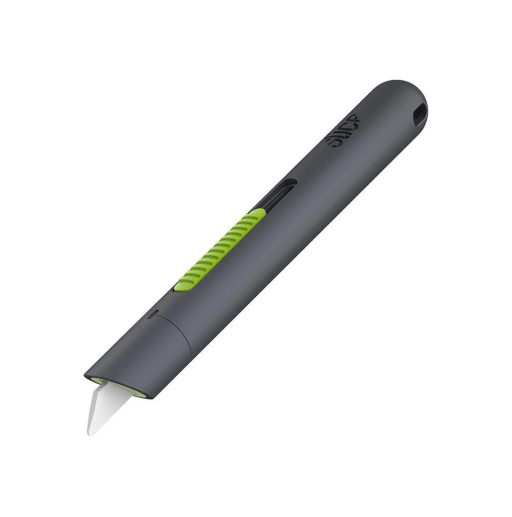
Slice 10512 Pen Cutter
I’ve tried carrying EDC pocket knives for opening boxes, and I’ve tried stocking cheap scissors in drawers all over the house. In the end, the best way to open boxes turns out to be these ceramic-bladed box openers from Slice. The blades aren’t sharp enough to cut a finger, but they will open tape, including that tricky tape that has threads in it. When you let go, the blade retracts, and can’t poke you when you reach into a pocket or a drawer. It sounds basic, but given how much I get shipped to me for convenience, this has been one of my top tools for the last few years.
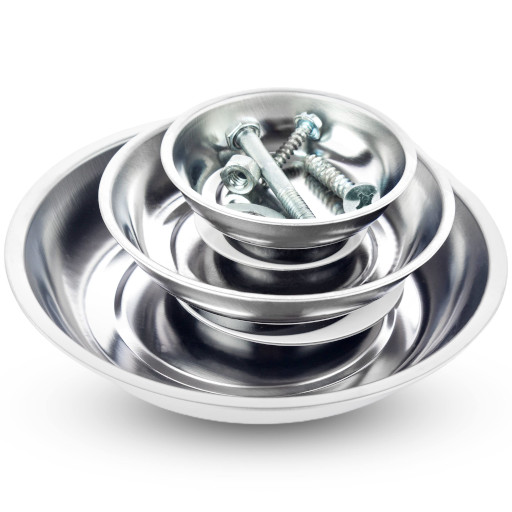
Magnetic parts bowls
I try to fix things myself when I can. If you DIY stuff, you’ve probably run into this problem: screws like to roll off surfaces and disappear. I got tired of this, and since most screws are made from ferrous metal, these little magnetic parts bowls solve the problem for me. I’ve got a few upstairs near where I practice guitar and where my home office desk is, and a few more downstairs on my work bench. Conveniently, the magnet in the base will also make the bowl stick to anything iron or steel, too, so I tend to be able to “plunk” down a bowl on something like a desk frame or my work bench vise, and know that all the screws for a project will stay in there. (Provided they’re ferrous.) Compared to random jars or recycled plastic dishes full of screws, this feels like a big upgrade for me, and so that is why this item is second on my list for 2025. There’s lots of variations of these available online or at your local stores – I recommend trying to find them in the local hardware store.
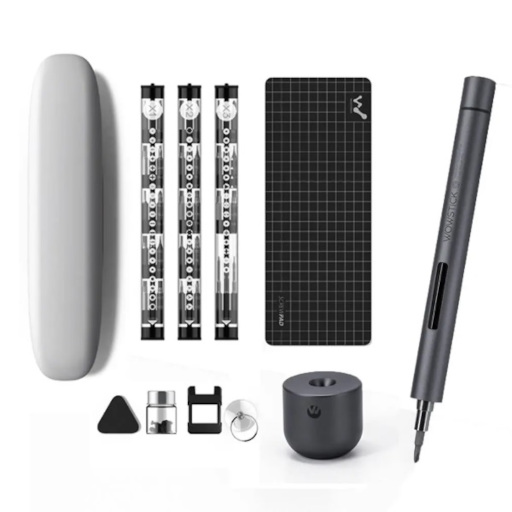
Wowstick electric screwdriver
Even with several complete small screwdriver sets and an electric drill that can fit screwdriver bits, I wanted something small that I could keep in my office and use for screwdriver tasks. I imagined it could help with taking apart keyboards or computers, and maybe occasionally for DIY projects around the house. About a year ago, I’d read several reviews of these Wowstick electric screwdrivers online and decided to buy one. I’m not sure exactly what model mine is, but it is larger than a pen and much smaller than most full-sized (analog) screwdriver handles that I have. It came with a large number of screw bit tips, which are unfortunately a smaller hex head size than the typical screwdriver tips. But along with my ifixit magnetic screwdriver set, I’ve got just about any type of screw covered. The Wowstick screw driver charges with Type-C USB, and due to the planetary gear box, it seems fine to just use it like an analog screwdriver by turning the whole screwdriver body, to get stubborn screws unstuck. It also helps me to not over-torque screws on things like small custom keyboards and prevents stripping out heads on tiny laptop screws.
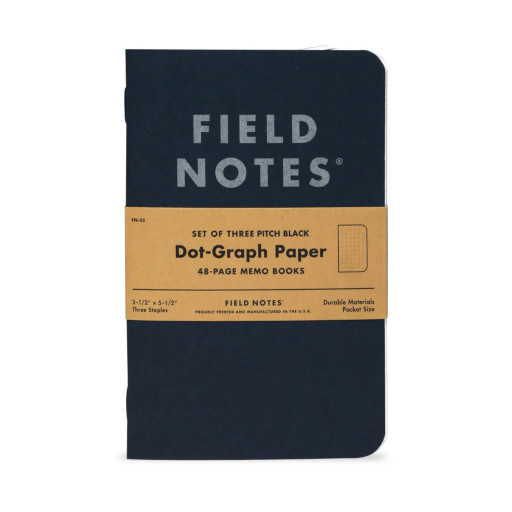
Field Notes notebooks
I’ve collected notebooks for a long time, but most of the journal-sized notebooks are too large to carry around all the time. The typical Field Notes softcover notebook fits in a jeans pocket with a pen. Because I can always have one with me, these have become handy for me to use for all sorts of quick notes, daily TODO lists, for drawing out diagrams and jotting down measurements as I’m working on something. There’s all kinds of special editions of these, but I generally tend to use either basic dot grid notebooks or their TODO list variant. I can recommend these highly for the cost over other little pocket notebooks – they’re just durable enough that after using them daily for a full notebook’s worth, the covers and spines are just broken in, but they don’t start falling apart like cheaper notebooks or spiral-bound pocket notebooks.
Neovim
The only software on this list, and the only free thing. Neovim is a modern vim. I’ve been primarily a vim user for the last 10 years (with side quests into emacs for Clojure, Lisp/Scheme and then to use org-mode). I made the switch to Neovim recently because I’d seen how powerful Language Server Protocol (LSP) was for Rust development in VS Code, but I wanted it in my usual vim editor. LSP will show you problems beyond simple syntax errors, right in your editor buffer, including compile and type errors, incorrect function names, and names of functions that are correct but aren’t imported to the current scope. I’m running a very minimal setup that still gets me LSP support for most things out of the box, and it has been great. I can highly recommend the switch if you’re already familiar with vim.
Conclusion
That’s a wrap on 2025. Happy new year, everyone.